

Leadership Retreats & Offsite Facilitation
Trust at work is at an all-time low
Employees are disengaged, skeptical, and quietly making exit plans. Employers are frustrated that their culture initiatives aren't working. The gap between what organizations say about their culture and how it actually feels to work there has never been wider.
Trust by Design is our answer to that gap. It's not a workshop. It's not a keynote. It's a methodology for making trust operational — visible in behaviors, policies, and processes, not just stated in values on a wall.
We help leadership teams get aligned, get honest, and leave knowing exactly what happens next.
Built for organizations doing real work
We work with small and mid-sized organizations — typically 50 to 1,000 people — that need leadership alignment, not just a team-building day.
❋ Startups (Series A–C), especially mission-driven companies navigating fast growth
❋ Nonprofits, philanthropy organizations, and social sector teams
❋ Private sector companies in healthcare, finance, and construction
❋ Leadership teams navigating transitions, strategy pivots, or trust breakdowns
* With few exceptions, we don't work with Fortune 500s. Not because we can't - we've both done it - but because the dynamics of smaller organizations are different, and we're better at those.

How we work
From first call to follow-through
We start by talking to people. Stakeholder conversations, sometimes surveys, always careful listening. The goal is to understand what's actually going on beneath the surface — not just the stated agenda. If your offsite is heavy on strategy and OKR alignment, we spend more time here. If the goal is connection and team cohesion, we move faster.
Discovery
We build a custom agenda around your goals. Not a template. Not a retreat-in-a-box. The design balances structured work time with the kind of conversation that only happens when people are away from their desks. We share the agenda with you in advance and refine it together.
Design
We facilitate together — both of us in the room (or on screen for hybrid engagements). One of us holds the content and process; the other watches the room. We're reading the energy, adjusting in real time, and making sure the loudest voice isn't the only one heard.
Facilitation
Every session ends with a clear, written list of next steps, owners, and timelines — not a "we'll send notes." For clients who want more, we stay on as implementation coaches for attendees, supporting what they committed to actually getting done.
Follow-through
❋ Format options: Half-day | Full day | 1.5 days | 2 days We recommend 1.5–3 days when teams are traveling. For local teams with a specific, focused goal, a single day works well.
Approach
Data-driven. Implementable. Occasionally funny.
Leadership teams don't need more inspiration. They need to know what to do on Monday morning.
That's the lens we bring. We're researchers at heart — we know the frameworks, the literature, the case studies. But our job isn't to show off what we know. It's to help your team move forward with clarity.
❋ Build the glue
Relationships are the infrastructure for everything else. Before teams can align on strategy, they need to trust each other enough to say what they actually think. We create that space.
❋ Create alignment on what matters
Not consensus for its own sake. Real alignment — where people understand the tradeoffs, disagree productively, and commit to a direction.
❋ Leave teams knowing what's next
Every engagement ends with specific, owned next steps. Not vibes. Not a beautiful strategy document that collects dust. Actual to-dos.
About Us
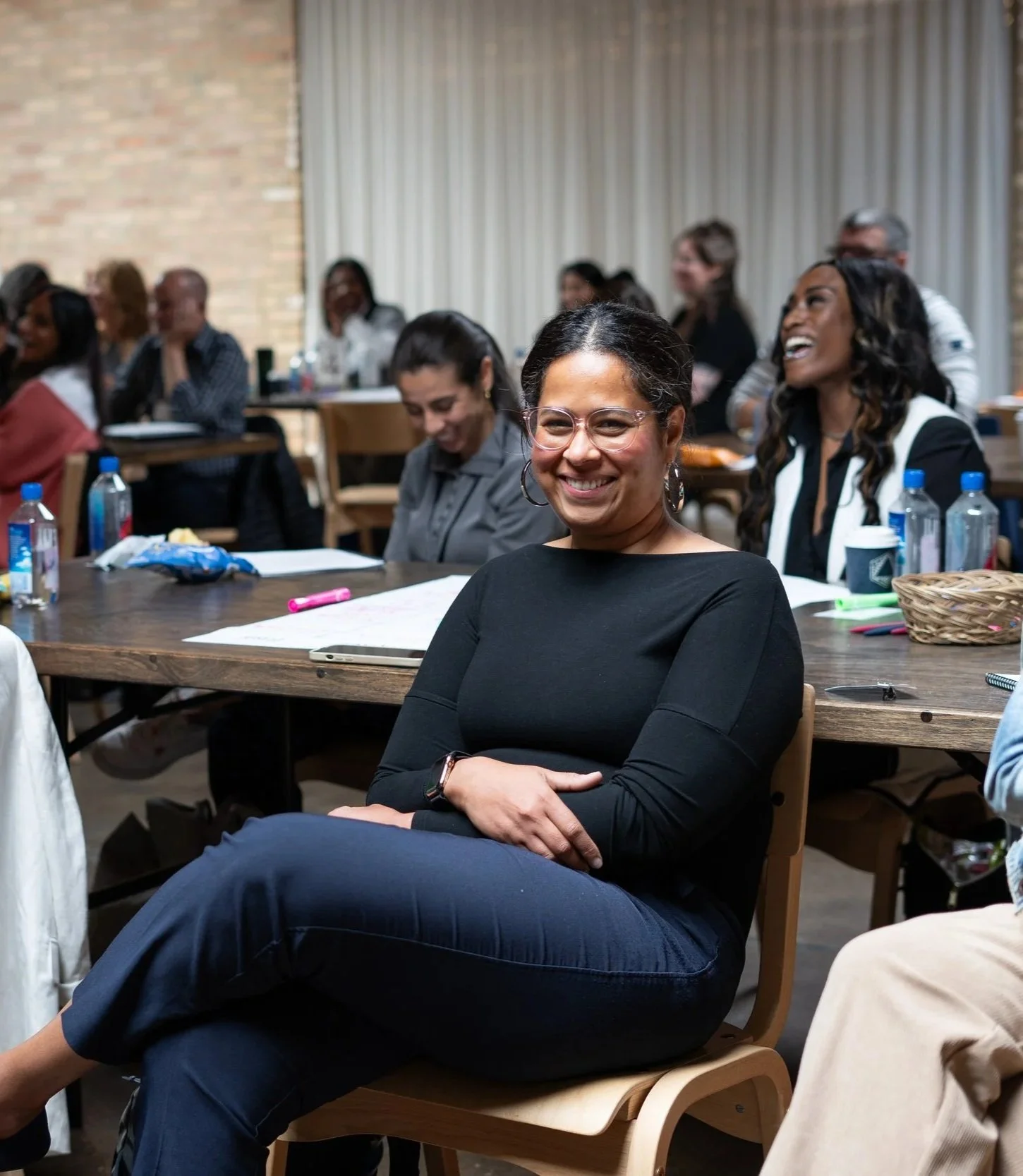
Aparna Rae
Aparna is a 3x founder, consultant, Forbes contributor, and facilitator whose work sits at the intersection of people strategy, organizational equity, and leadership development. She brings somatic and people-centered practices into the room — the kind of facilitation that attends to what people aren't saying, not just what they are. She has worked with hundreds of organizations across sectors, and her writing on workplace dynamics reaches tens of thousands of readers each week.
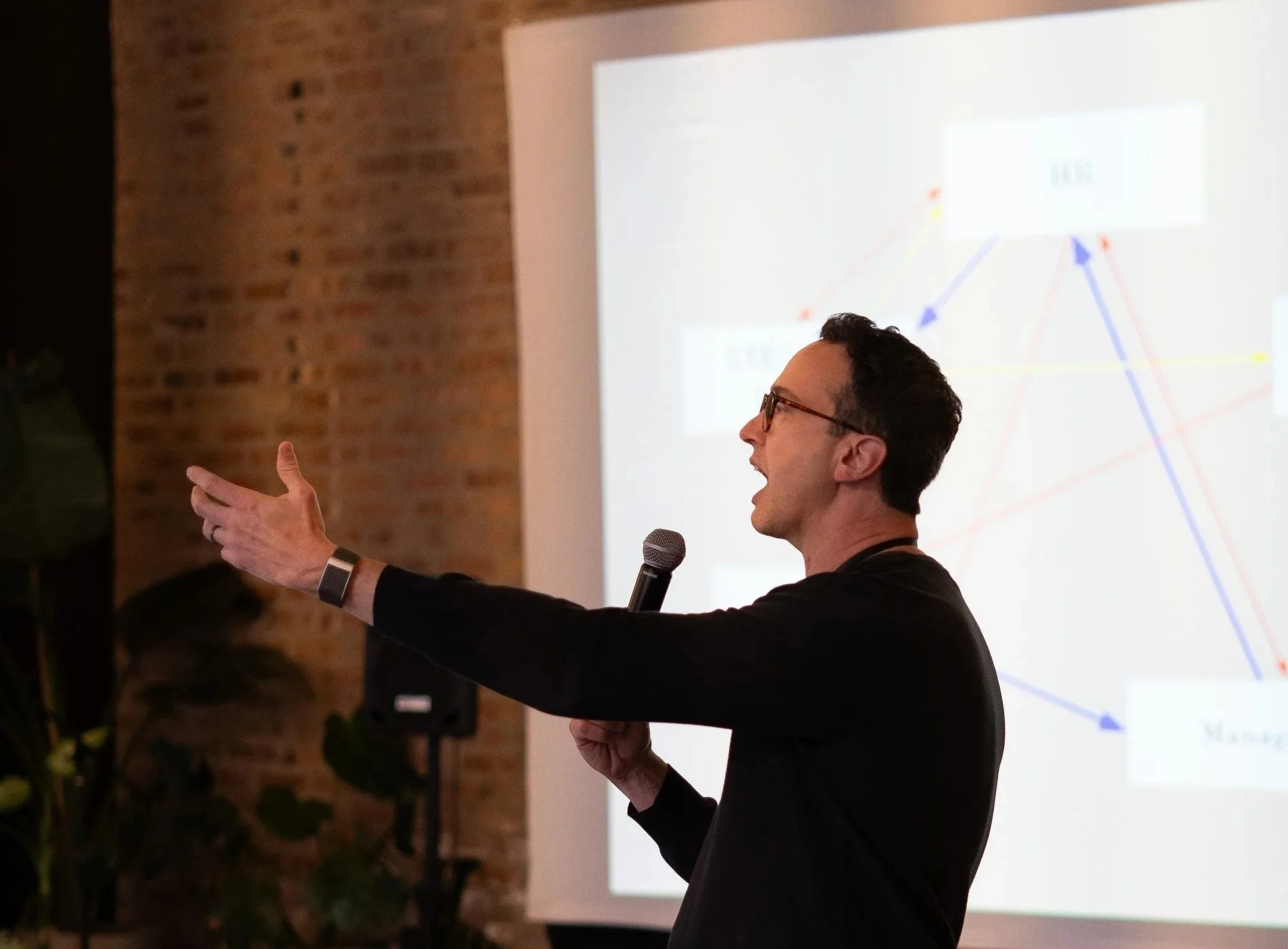
Rob Hadley
Rob spent nearly 20 years working inside large organizations before anyone could pay him to help fix them from the outside. At Liberty Mutual, he led one of the most extensive analytical assessments of representation gaps and process biases of any Fortune 500 company. Before that, he worked at GE in international corporate development and quality. He holds an MBA from the Wharton School at the University of Pennsylvania and a Certificate in Diversity & Inclusion from Cornell University. He is the research anchor in the room — the person who can tell you what the data says and what it means.
Origin Story
Origin Story
We didn't set out to build Trust by Design. We set out to operationalize DEI.
For years, Aparna & Rob ran wildly popular data-driven DEI masterclasses and off-sites. We were known for being rigorous, practical, and direct.
They were known for being rigorous, practical, and direct — not the consultants who showed up with a moving slideshow and a charge-by-the-workshop model. People left their sessions saying, "This was better than my Cornell certification." Program officers at foundations started sending their whole staff. Nonprofit executive directors came back year after year.
What made the work different was the framing. Instead of treating equity as a values problem, they treated it as an operations problem. Lean value stream mapping applied to hiring. Statistical variance monitoring applied to pay. Process redesign applied to performance reviews. It worked because it was concrete, not inspirational.
Then in 2023 DEI became politically radioactive, almost overnight. Companies that had invested heavily in equity programs started quietly dismantling them. Legal teams got nervous.
Here's what Aparna kept thinking about: the underlying problem didn't go away.
Employees still needed to know their employers would treat them fairly. That they wouldn't be the first to go in a layoff and the last to know. That the promotion criteria actually meant something.
That's a trust problem. And you can't fix a trust problem by swapping out the language on your culture deck.
So they rebuilt the work around what had always been true: equity, done right, is just good management. Clear policies. Consistent process. Data that surfaces what's actually happening, not what leadership hopes is happening. Relationships that can handle honesty.
Results, not testimonials (well, both)
Healthcare insurer, Pacific Northwest
A major health insurer engaged us to design and lead an employee engagement strategy and a series of leadership half-day offsites. The offsites created alignment across HR, operations, and other business units on a shared people strategy. The result: a 30% increase in employee retention over three years.
Workforce development nonprofit, National
We facilitated a series of three full-day offsites — one series for senior leaders, one for store managers — for a large nonprofit with 32 locations. Both groups were struggling with attrition and a fragmented culture. Over the course of the engagement, store-level attrition dropped from 110% to 70% (below the retail industry average). The leadership team aligned around new community partnerships and revenue opportunities, including a partnership that added Amazon drop-off locations across sites.
Pricing
-
Our facilitation rate starts at $5,000 per facilitator per day — plus travel and pre-engagement planning (billed at $250/hour). We'll give you a clear proposal after our discovery call.
-
For nonprofits with annual budgets under $1.5 million, we offer a sliding scale with a floor of $3,000 per facilitator per day.
We'll give you a clear proposal after our discovery call. No surprises.