
Trust by Design
A methodology for making trust operational — visible in behaviors, policies, and processes, not just stated in values on a wall.
-
Live, every week, free
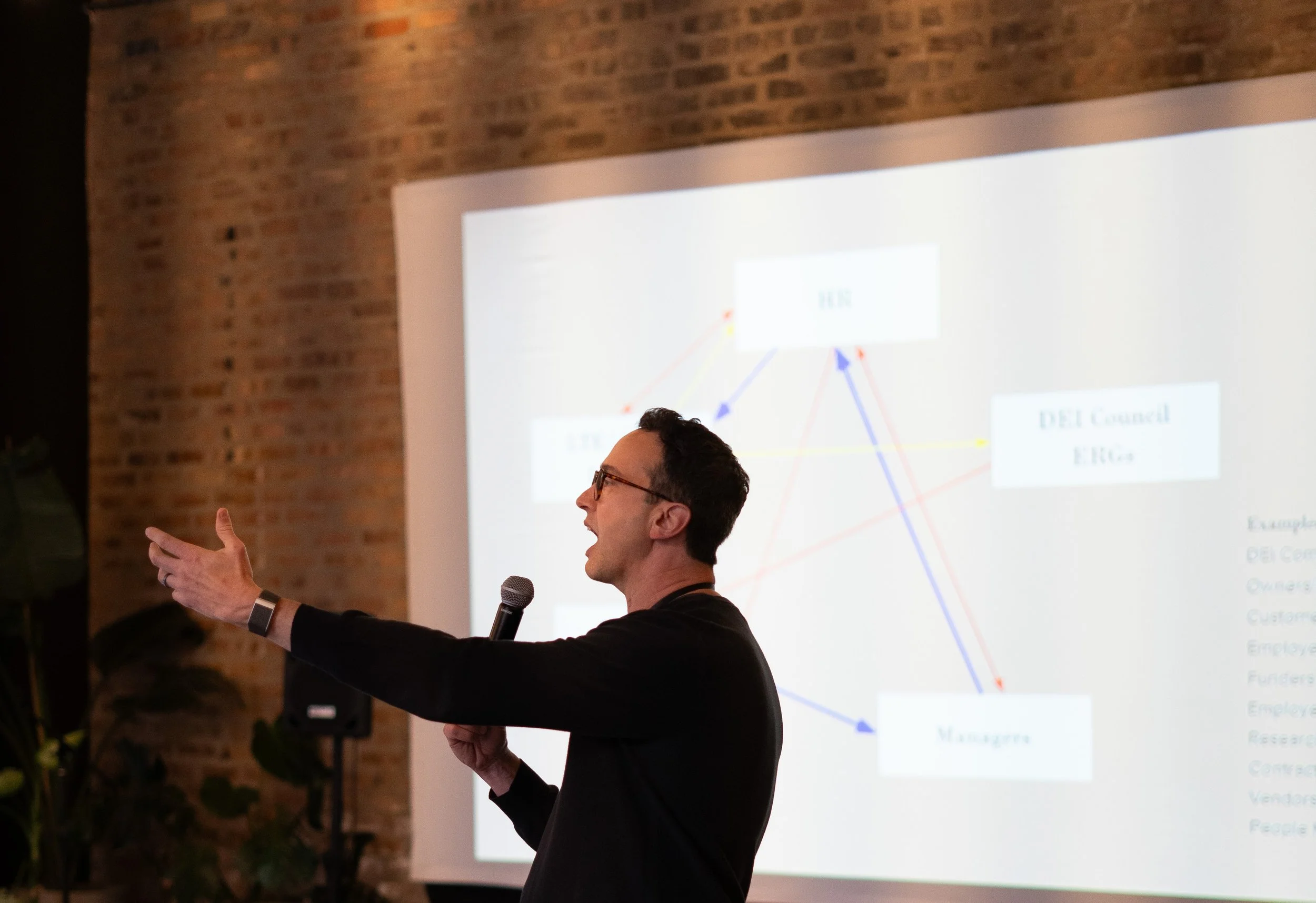
Every week, Aparna and Rob host a free 30-minute session on a specific trust, equity, or management problem facing small and mid-sized organizations.
Recent topics have included: management practices that Fortune 500 companies use and mid-market companies shouldn't, how to do benefits equity on a budget, workforce planning that doesn't destroy trust, and why merit is harder to define than most managers think.
Sessions are free to attend. Pay-what-you-can for those who want to support the work.
Sessions are recorded. Registration gets you access to the archive.
-
Some trust problems can be addressed with a better policy or a clearer process. Others need people in the same place, having the conversation they've been avoiding.
Learn more about our approach —>
Aparna and Rob have facilitated leadership offsites and retreats for organizations across sectors — startups, nonprofits, healthcare companies, and social sector organizations. They bring the same Trust by Design framework into the room: diagnosis first, substance above hype, outcomes you can act on Monday morning.
What makes their offsite facilitation different is the combination: Aparna's somatic and people-centered practice — the read on what people aren't saying — alongside Rob's analytical frame, drawn from nearly 20 years inside large organizations, including leading one of the most extensive equity audits of any Fortune 500. Neither of them is performing. Both of them are working.
Results from past engagements include a 30% increase in employee retention over three years at a major health insurer, and store-level attrition dropping from 110% to below the retail industry average at a workforce development nonprofit.
-
Our clients come to Trust by Design from different starting points, but they're solving for the same thing: an organization where people do their best work because they trust the environment they're in.
Startups (Series A–C): Rapid growth creates policy gaps and culture drift. High-trust cultures are what let you scale without losing the people who made you good in the first place.
Nonprofits and social sector organizations: Mission doesn't automatically produce trust. Staff burnout, board-staff tension, and inconsistent management practices are just as prevalent in mission-driven orgs as anywhere else — sometimes more so.
Private sector companies in healthcare, finance, and construction: High-stakes, high-accountability environments where trust breakdowns have direct operational consequences. We've worked across all three.

Trust at work is at an all-time low.
Employees are disengaged, skeptical, and quietly making exit plans. Employers are frustrated that their culture initiatives aren't working. The gap between what organizations say about their culture and how it actually feels to work there has never been wider.
Trust by Design is our answer to that gap. It's not a workshop. It's not a keynote. It's a methodology for making trust operational — visible in behaviors, policies, and processes, not just stated in values on a wall.
Origin Story
Origin Story
We didn't set out to build Trust by Design. We set out to operationalize DEI.
For years, Aparna & Rob ran wildly popular data-driven DEI masterclasses and off-sites. We were known for being rigorous, practical, and direct.
They were known for being rigorous, practical, and direct — not the consultants who showed up with a moving slideshow and a charge-by-the-workshop model. People left their sessions saying, "This was better than my Cornell certification." Program officers at foundations started sending their whole staff. Nonprofit executive directors came back year after year.
What made the work different was the framing. Instead of treating equity as a values problem, they treated it as an operations problem. Lean value stream mapping applied to hiring. Statistical variance monitoring applied to pay. Process redesign applied to performance reviews. It worked because it was concrete, not inspirational.
Then in 2023 DEI became politically radioactive, almost overnight. Companies that had invested heavily in equity programs started quietly dismantling them. Legal teams got nervous.
Here's what Aparna kept thinking about: the underlying problem didn't go away.
Employees still needed to know their employers would treat them fairly. That they wouldn't be the first to go in a layoff and the last to know. That the promotion criteria actually meant something.
That's a trust problem. And you can't fix a trust problem by swapping out the language on your culture deck.
So they rebuilt the work around what had always been true: equity, done right, is just good management. Clear policies. Consistent process. Data that surfaces what's actually happening, not what leadership hopes is happening. Relationships that can handle honesty.
WHAT TRUST BY DESIGN IS MADE OF
Trust Cultivation
The relational infrastructure in an organization — how leaders behave, how teams communicate, how conflict is handled, whether people feel psychologically safe enough to tell the truth. You can't shortcut this with an offsite or a survey. It builds over time, through consistent behavior and intentional practice. We help organizations identify where trust is actually breaking down, not just where it feels uncomfortable.
Policy and Process Clarity
The operational infrastructure — hiring, performance reviews, promotion criteria, compensation frameworks, how decisions get made and communicated. When these processes are opaque, inconsistent, or poorly designed, trust erodes. When they're clear, fair, and applied consistently, trust follows. We help organizations audit and redesign these processes using the same operational excellence frameworks used in manufacturing and finance — applied to people.